Loving Someone You Can't Save: Everything I Thought I Knew About Addiction Was Wrong
Jul 28, 2026
A brief note before I continue: This is my personal story and my understanding of addiction based on what my family lived through, what I learned in Al-Anon, counseling, and my own reading over the years. I am not an addiction specialist, therapist, or medical professional, and I don’t pretend to speak for every person or family affected by addiction. Experiences differ. I’m sharing what was true for us, what I misunderstood, and what I came to see differently.
Last week I introduced you to my sister.
This week I'd like to introduce you to my ignorance.
I don't say that to be hard on myself. I say it because it's true. For years, I believed I understood addiction. I had answers. I had judgments, although I called them "common sense" back then.
Then addiction came into my own family, and almost everything I believed began falling apart.
One of the hardest memories I carry is one of the times I drove Kelly to an extended treatment program.
She seemed unusually calm that morning. Looking back, I wonder if she already knew exactly what she was going to do. Partway there, she asked if we could stop at a convenience store because she needed toothpaste. It sounded reasonable, so I pulled in and waited while she ran inside.
When she came back, she had a little white sack in her hand. I didn't think anything about it until we were back on the road. Then I watched her pull out four tiny bottles of Fireball whiskey. One after another, she twisted off the caps and drank them down before we reached the treatment center.
I remember staring at her, stunned, as my heart sank. We were fifteen minutes away from a place where people were preparing to help her get sober, and addiction was fighting for every last inch of ground it could hold.
When we parked, something else happened that I'll never forget.
She had pills I hadn't known about.
As she climbed out of the car with her suitcase, the pill bottle slipped from her hand, and the lid popped off, scattering little white pills across the pavement. Kelly dropped to her hands and knees, trying desperately to gather them before anyone noticed. I moved beside her, stomping around, crushing the pills under my shoes before she could get to them.
If someone had driven through that parking lot, they probably would have wondered what in the world those two women were doing: one sister scrambling to save the pills and the other scrambling to destroy them.
At the time, I thought we were fighting each other. Now I understand we were both fighting addiction.
That moment has stayed with me because it put one more crack in the beliefs I’d carried for most of my life. I thought people used because they wanted to.
I thought if someone truly loved their family enough, they would stop. I thought enough consequences would eventually convince them to change. None of those beliefs survived that parking lot.
Kelly loved us. There has never been a question in my mind about that. She adored her daughter. She loved our mother, my brothers and me.
The problem wasn't love. The problem was addiction.
As I tried to make sense of what was happening, I began reading everything I could find. I listened to physicians, therapists, neuroscientists, and people who had actually found recovery. I attended Al-Anon. I wasn't looking for excuses. I was looking for answers because nothing I believed fit what I had been living.
One of the first things I learned was that addiction is far more than a bad habit or a series of poor decisions.
Repeated use of alcohol or drugs changes the brain. The areas responsible for judgment, impulse control, and decision-making become less effective over time, while the brain's survival and reward systems begin treating the substance as though it's required in order to go on living.
People are still responsible for the harm their choices cause, but those choices are far more complicated than I once understood. Before I learned this, I believed Kelly was choosing alcohol and drugs instead of choosing us.
Today I don't believe that at all. Addiction had taken such a strong hold that the healthy part of Kelly was losing more and more influence over her choices. That understanding didn’t erase the pain or the consequences, but it changed the way I saw both my sister and the disease.
It took me much longer to understand that addiction doesn't just belong to the person who's drinking or using. It slowly wraps itself around the entire family.
Late-night phone calls made my stomach tighten. I always wondered whether this was going to be the call we had been dreading.
Plans could change without warning, and holidays and birthdays carried an uneasiness that was difficult to ignore. When Kelly and my brothers were together, part of me stayed alert, waiting to see what might happen. Sometimes they disappeared for hours, and we knew what they were doing. Other times an argument erupted and became a shouting match or even a physical fight. We wanted to enjoy being together, but addiction had taught us to keep one eye on the room.
One year, addiction showed up on my daughter Amy’s sixteenth birthday. Kelly called to say she was already in our small mountain town and would be at my house soon. When she heard that I needed to pick up Amy and a friend at the movie theater, she offered to get them because she would be driving right past it.
I had developed what I called a Spidey-sense with Kelly. I could usually hear in her voice when she had been using, and that day I heard nothing unusual. I asked anyway. Kelly normally didn’t lie to me, but that time she did. About thirty minutes later, the police called and told me to pick up Amy and her friend along the side of the road. Kelly had been arrested for driving under the influence with both girls in the vehicle.
When I arrived, I couldn’t even look at her. I had never been angrier.
That's what addiction does. It doesn't stay in one corner of a person's life; it spills into everyone else's.
There were many days when I was furious with Kelly. It wasn’t because I had stopped loving her. I was angry about what addiction was doing to our family, especially to our mother.
My mother could never stop worrying about Kelly. She lost sleep and kept trying to hold the family together even as the strain was wearing her down. I could see it happening, and watching her suffer took its toll on me too
Growing up in the forties and fifties, our mom believed family problems stayed inside the family. You didn't tell people your daughter was an alcoholic. You didn't talk about addiction…you hid it. You certainly didn't ask for help.
You smiled, changed the subject, and hoped no one would find out.
As I look back now, I know that secrecy made everything even harder. Instead of sharing the burden, each of us tried to manage our piece of it alone.
Shame has a way of isolating families, and isolation is exactly where addiction grows strongest.
Understanding addiction as a disease did not erase the broken trust, broken promises, or broken hearts it left behind. Our family still had to live with the consequences. What changed was the way I understood the person inside the disease.
I stopped asking, "Why won't she stop?"
Instead, I found myself asking, "What is this disease doing to her?"
Those are very different questions. The first had already decided who Kelly was. The second left room for curiosity and compassion. Compassion doesn't remove accountability, but it changed the way I carried it.
One of the hardest things I have admitted is that I wasn’t as different from Kelly as I once wanted to believe. I was not addicted to alcohol or drugs, but after Kelly died and several other losses followed, I began looking for relief too.
I found it in slot machines, food, and work- anything that gave my mind a break and numbed the ache for a little while.
It got out of hand.
It got far enough out of hand that I went to gambling counseling and life counseling. I could see the direction I was headed, and I wanted help before I went any farther.
That rough period taught me something I don't think I could have learned any other way.
Pain makes all of us vulnerable. Kelly and I were not fighting the same battle, but both of us had looked for ways to dull emotional pain. Our experiences were different in their severity and consequences, but for the first time I understood the desire to escape what hurt.
For the first time, I stopped seeing addiction as something that happened only to “other people.” I began to understand how vulnerable human beings can become when relief is immediate, and pain feels endless. That understanding did not excuse the harm any of us caused, but it made my compassion less theoretical and far more personal.
One of the saddest things addiction does is steal a person's identity. After a while, people stop saying their name. They become "the alcoholic," "the addict," "the one who can't get it together."
But that was never the whole story. Kelly was so much more than the hardest chapter of her life.
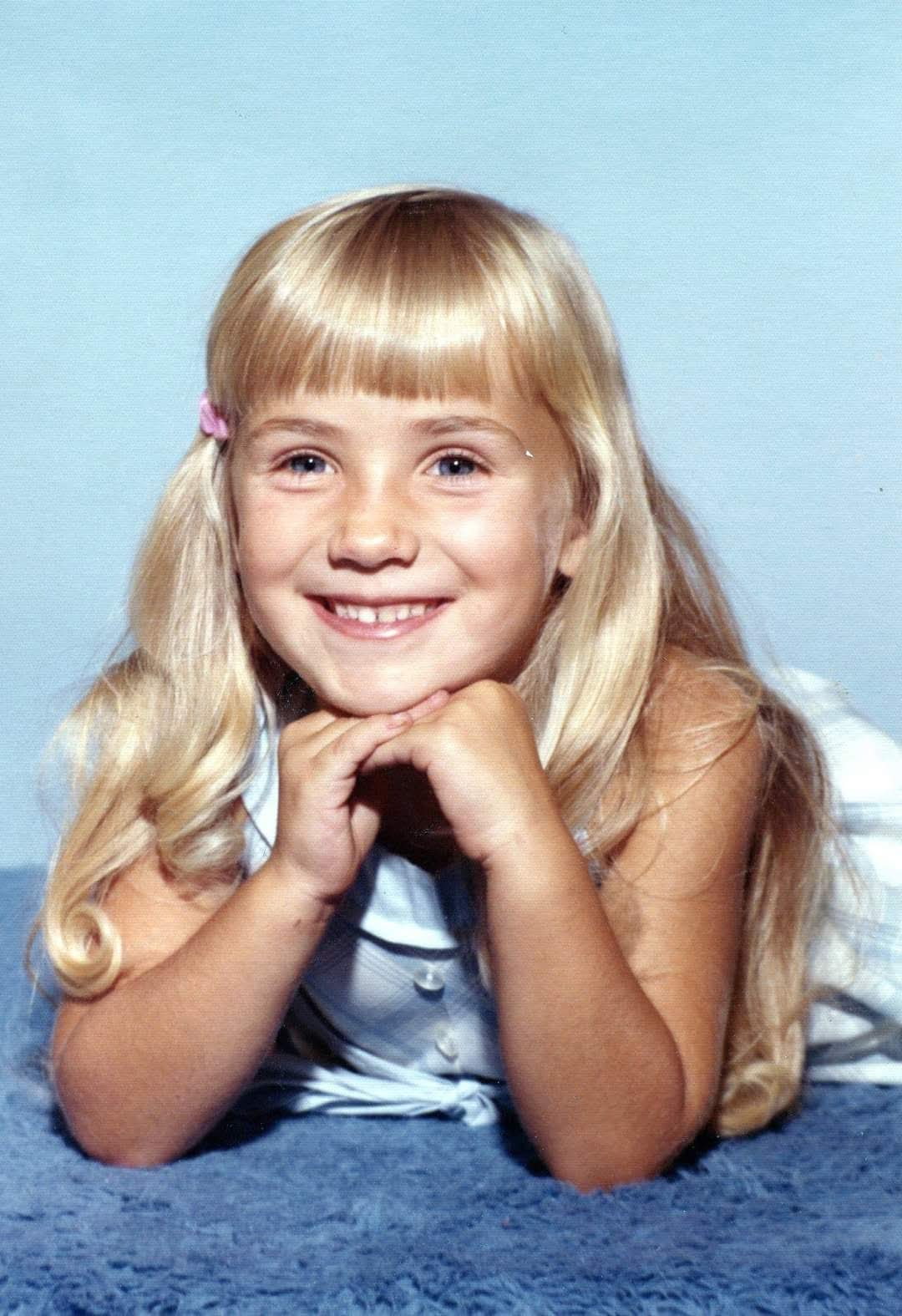
When I think of her now, I don't picture the Circle K parking lot. I picture a little girl following me from room to room because she simply wanted to be wherever I was. I remember her lying in bed at three years old, practicing Lamaze breathing after watching a movie because she wanted to be ready for the baby she'd someday have.
I remember camping trips when the rest of us unpacked sleeping bags while Kelly unpacked a broom. She couldn’t relax until she had swept the campsite. We teased her, and she would laugh that huge laugh of hers and keep sweeping.
I remember watching her guide people through whitewater, completely in her element, reading the river and using her skill to give others an adventure while bringing them safely through it.
If I wasn't home when Kelly called, she often didn't leave a message.
She left a song.
I'd walk through the door, push the button on my answering machine, and instead of hearing her voice I'd hear Landslide or Into the Mystic. Sometimes she'd sing along. Sometimes she'd let the music say what she couldn't.
Even now, those songs stop me in my tracks. She's not the woman who struggled with addiction. She's simply my little sister again.
We have a tendency to reduce people to the hardest thing they've ever done or the hardest thing they've ever lived through. We remember them as the addict, the one who had the affair, the person with the diagnosis, the one who went to prison, or the one who made the unforgivable mistake.
In Kelly’s case, that label belonged to a little girl who practiced Lamaze breathing, a woman who swept campsites and a sister who left songs on my answering machine.
Every one of them has a story.
Kelly's story deserved to be remembered in its entirety.
So does yours. So does mine.
My sister taught me that understanding can take us places judgment never will.
Next week I'll finish this series with the lesson that took me the longest to learn.
For years, I believed love could save someone.
I was wrong about that, too.
Diana